
From Abisko to Kebnekaise
Kungsleden Abisko-Nikkaluokta
 Lapland, Sweden · Sweden
About Kungsleden Abisko-Nikkaluokta
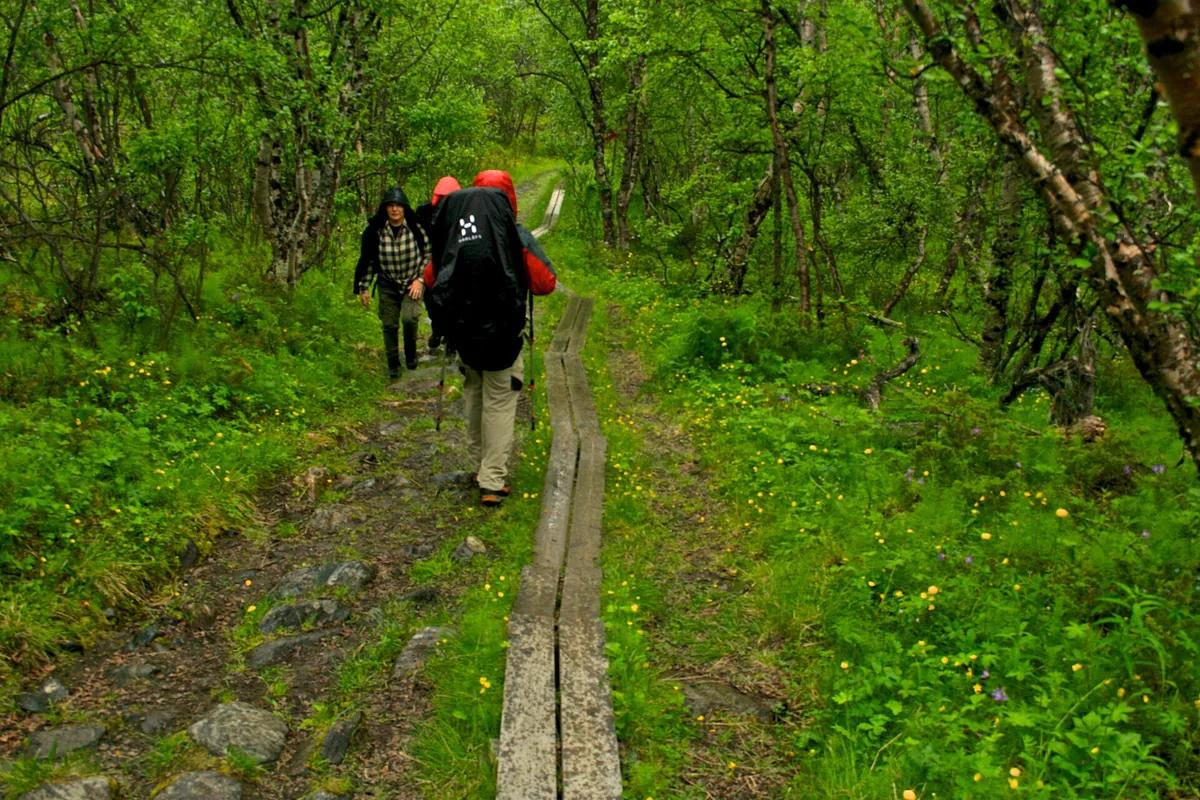
Kungsleden between Abisko and Nikkaluokta is the best-known stretch of Sweden's royal trail: 105 kilometres through Lapland, from Torneträsk to the foot of Kebnekaise, with mountain huts every ten to twenty kilometres.
The first day follows birch woods along Lake Abisko to Abiskojaure, then the route climbs through Alesjaure into the high country and follows the Tjäktja valley to the Tjäktjapass, the highest pass on the Kungsleden.
From Sälka and Singi the glaciers of Kebnekaise lie ahead, and the branch to Kebnekaise fjällstation runs between the west and east summits. The last day descends to Nikkaluokta, with the Čuhčunjohka valley on one side.
Practical. The Swedish tourist association's huts can be booked or have an unmanned section, and camping is allowed at the designated spots. The season runs from late June to mid September, with the ruska in September. Abisko is reachable by train, Nikkaluokta by bus from Kiruna.
Stages Kungsleden Abisko-Nikkaluokta
The Kungsleden Abisko-Nikkaluokta is split here into 7 stages of 12 to 21 km, 105 km in total, from Abisko to Nikkaluokta. The stages below are a sample itinerary: in the planner you put together your own days and choose where you sleep.
Abisko - Abiskojaure
Through birch woods along Torneträsk and Lake Abisko to the hut at Abiskojaure, with the mountains of the national park across the water.
Accommodation
Abiskojaure fjällstuga
Alpine Hut
Swedish tourist association hut on Lake Abisko, with beds, kitchen and sauna, and the beach a few metres from the door.
Abiskojaure - Alesjaure
Up the Kamajåkka valley, then onto the open high country and the large hut at Alesjaure, with views over the lakes and the glaciers to the south.
Accommodation
Alesjaure fjällstuga
Alpine Hut
Large hut high above the Alesjaure lakes, with a small shop, a self-catering kitchen and views over the glaciers to the south.
Alesjaure - Tjäktjapasset
Over the moraine ridges and up the Tjäktja valley to the Tjäktjapass, the highest point of the Kungsleden, with the hut just below the top.
Accommodation
Tjäktja fjällstuga
Alpine Hut
Small hut just below the Tjäktjapass, sheltered in a side valley, the last place to sleep before the highest pass on the Kungsleden.
Tjäktja - Sälka
A short day across the plateau and past the glacier tongues to Sälka, where the huts sit below the Kebnekaise mountains.
Accommodation
Sälka fjällstuga
Alpine Hut
Two huts in the valley below the Kebnekaise mountains, with the tongues of the Sälka glacier across the water.
Sälka - Singi
Down the Tjäktja valley to Singi, the junction of the Kungsleden where the route to Kebnekaise branches off.
Accommodation
Singi fjällstuga
Alpine Hut
Hut at the junction of the Kungsleden, where the route to Kebnekaise branches off and the paths to Kaitumjaure and Vakkotavare continue.
Singi - Kebnekaise
The branch to Kebnekaise fjällstation between the west and east summits, with glacier and moraine all around.
Accommodation
Kebnekaise fjällstation
Hostel
Large mountain lodge at the foot of Kebnekaise, with restaurant, beds and a shop, and the climb to the west summit starting at the door.
Kebnekaise - Nikkaluokta
Past the lakes and down the Čuhčunjohka valley to Nikkaluokta, where the bus to Kiruna waits.
Accommodation
Nikkaluokta
poiTypes.null
Trailhead by the lake at Nikkaluokta, with a small restaurant, a Sami family business and the bus to Kiruna several times a day.
FAQ
Below you'll find answers to some frequently asked questions.
Do I need to book the huts in advance?
Do I need to book the huts in advance?
The Swedish tourist association's huts can be booked ahead and usually keep an unmanned section for walkers without a reservation. In high season booking is wise, especially around Tjäktja and Sälka.
When is the season?
When is the season?
Late June to mid September. July and August are warmest and busiest, September brings the ruska and far fewer people but also shorter days and the chance of snow on the pass.
How do you reach Abisko and get back from Nikkaluokta?
How do you reach Abisko and get back from Nikkaluokta?
Abisko has a station on the line to Narvik with night trains from Stockholm. From Nikkaluokta a bus runs to Kiruna, where you connect to train or plane.
How hard is the Tjäktjapass?
How hard is the Tjäktjapass?
The pass is the highest point of the Kungsleden and lies open to wind and snow, even in summer. In bad weather it is the day to start early or wait a day.
Can you buy food along the way?
Can you buy food along the way?
The staffed huts have a small shop with dry food and gas, and Kebnekaise fjällstation has a restaurant. Carry your own food for the first days.
Do you have to climb Kebnekaise?
Do you have to climb Kebnekaise?
No. The route to Nikkaluokta passes the fjällstation and not the summit. Anyone wanting the top does it as a day trip with a guide or own gear, leaving the pack behind.