
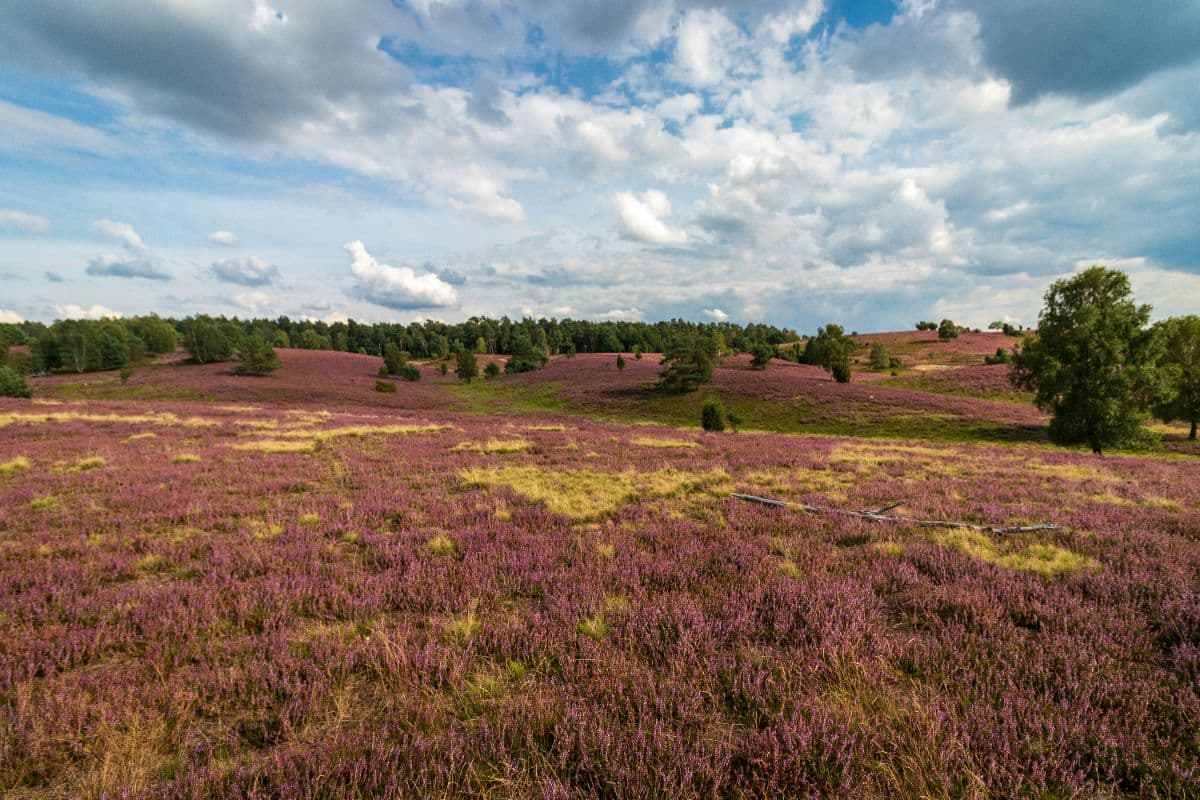
 Lüneburger Heide · Germany
Heidschnuckenweg Nordheide
Six days of heath from Hamburg to Soltau

About Heidschnuckenweg Nordheide
You step off a Hamburg S-Bahn train and fifteen minutes later you are walking through flowering heather. Few long-distance trails start so improbably, and none hold that tone for as long: six days of sandy paths, heath plains and quiet stream valleys from Hamburg-Fischbek to Soltau, some 100 kilometres across the northern Lüneburger Heide.
The heart of this route is Wilsede. The car-free heath village, reachable only on foot or by horse cart, sits in the middle of the largest connected heathland of north-west Germany. Just north of it lies the Totengrund, a bowl-shaped valley you enter from the rim, with a view that belongs on postcards. And above it all rises the Wilseder Berg, at 169 m the highest point of the entire North German plain, with a near-complete panorama over the heath. But the route has more: the Höllenschlucht near Buchholz, the Büsenbachtal stream valley, the Kreuzberg heath that spent decades as a military training ground before the heath reclaimed it, and the broad pine forests along the Böhme at Soltau.
Practical. Six stages of 13 to 27 kilometres, mostly sand, with just over 600 m of climbing in total. Nothing technical, but the distances demand stamina: sturdy shoes and well-filled water bottles matter, as refreshment stops are sparse in the heath. The trail is waymarked throughout with a white 'H' on a black square, and the stage towns sit on or near railway lines: the S3 (Hamburg), the Heidebahn via Buchholz, Handeloh and Soltau. Overnight in heath villages such as Undeloh, Niederhaverbeck and Bispingen; capacity is limited, so book ahead, especially during the bloom from mid-August to mid-September.
Stages Heidschnuckenweg Nordheide
The Heidschnuckenweg Nordheide is split here into 6 stages of 13 to 27 km, 105 km in total, from Hamburg-Fischbek to Soltau. The stages below are a sample itinerary: in the planner you put together your own days and choose where you sleep.
Hamburg-Fischbek - Buchholz
A fitting opening stage: fifteen minutes out of the S-Bahn and the Fischbeker Heide opens up, one of the largest heathlands within Hamburg's city limits. The path swings up and down through the dry valley, sandy tracks with heather both sides and a view towards the Elbe. Then the woods take over: the Karlstein boulder in a dark beech forest, the light Doppelheide clearing, and finally the old oak villages of Langenrehm and Nenndorf, where time seems to slow. Buchholz awaits with a café terrace.
Buchholz - Handeloh
The day of heaven and hell, both real. First the Höllenschlucht, a dark incised dry valley that earned its name honestly; then the climb onto the Brunsberg, at 129 m one of the highest tops of the Nordheide, heather open all around and sheep grazing. Through the Büsenbachtal you follow one of the region's prettiest heath streams, crystal clear over sand, past the Pferdekopf rocks. In Handeloh the railway is close again: the Heidebahn stops here.
Handeloh - Undeloh
A day of two worlds. First the light 'primeval forest' stretch along the Seeve: marshy banks, fallen trees left where they lie, frogs jumping. Then the wide Weseler Heide, the path on a low ridge with views over waves of heather. In Wesel stands the Hexenhaus, one of the oldest farmhouses around. Undeloh itself is the heath village from the postcards: thatched houses around the nearly 800-year-old fieldstone church with its wooden bell tower. The Heide-ErlebnisZentrum explains how people and sheep shaped this whole landscape.
Undeloh - Niederhaverbeck
The flagship day of the Nordheide. Through the soft Radenbachtal to Wilsede, Germany's most famous heath village: car-free, horse carts on the lane, a museum farm from 1770. From Wilsede a short detour is worth it for the Totengrund, arguably the finest heath valley in the whole Lüneburger Heide, a bowl of flowering heather you enter from above. Then the Wilseder Berg: at 169 m the highest point of the North German plain, with a near-complete panorama over the heath. The descent to Niederhaverbeck through the Haverbeeke valley is the finale it deserves.
Niederhaverbeck - Bispingen
The quiet day. Out of the Haverbeeke valley onto the divide between Weser and Elbe - invisible, but the water around you now flows towards two seas. Through the Wümme headwaters, where a small lake glints between the reeds, and across the young Behringer Heide, only recently restored by felling trees. The Brunau follows you as a little river to the Brunausee, ringed by alders. Over the Borsteler Kuhlen, a rough patch of heath and juniper, you drop into Bispingen, where the Luhe babbles through the village.
Bispingen - Soltau
The longest day of the Nordheide, and a watery one. From Bispingen along the little Luhe and its springs, then the secret Kreuzberg heath, a former military training ground the heath has reclaimed, where walkers are rare. Via the Böhmetal, with views from the high banks onto the twisting river, and the Grundlose Kuhle, a dark deep hollow in the forest, you reach Soltau. Look out for the fountains downtown: this 'Spielestadt' takes games seriously, with a games museum in the middle of town and a thermal bath for tired legs.
FAQ
Below you'll find answers to some frequently asked questions.
Ready to Explore Heidschnuckenweg Nordheide?
Start planning your adventure today!
Open this trip in the free Vandra mobile app and copy it to your own account, so you can edit it and plan freely, exactly the way you want.
More trips nearby
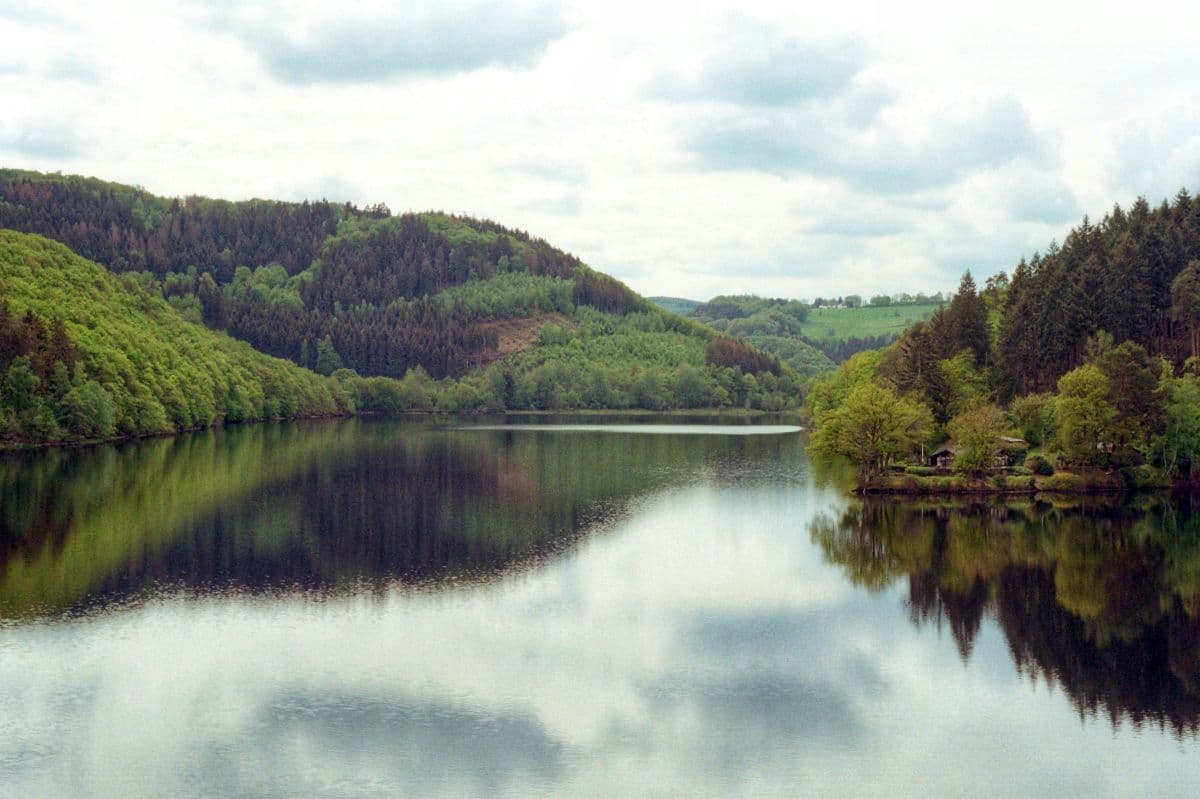
 National Park Eifel · Germany
Wildnis Trail Eifel
Four days through the Eifel National Park: beech forests, open high plains, and the lakes along the Rur. Quiet paths, red deer calling in autumn, and the deserted village of Wollseifen.
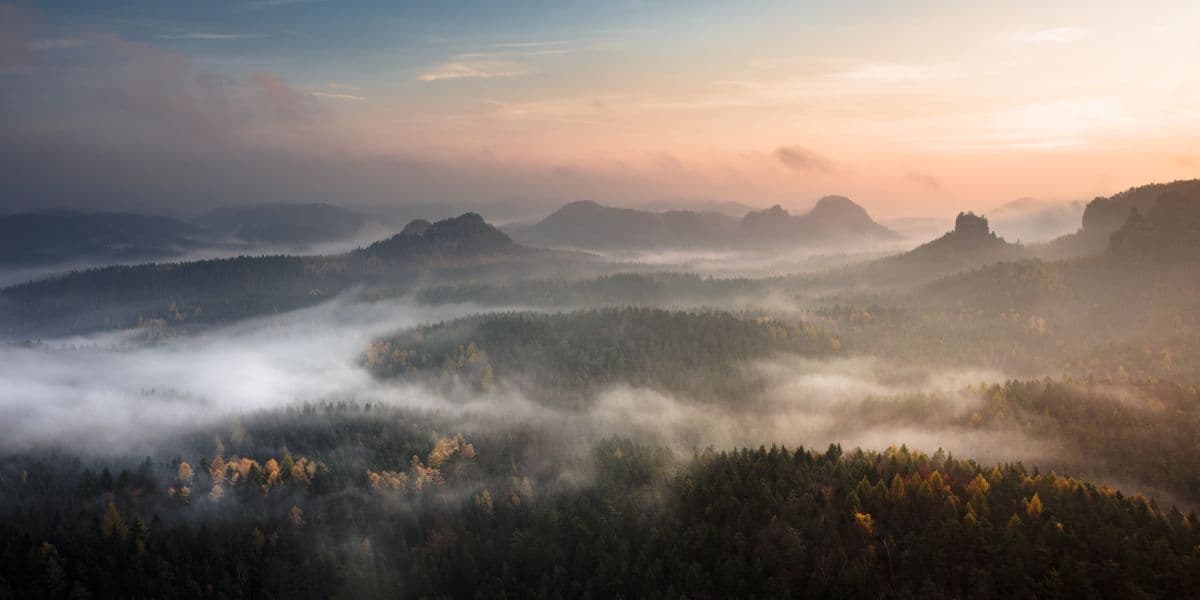 Saxon Switzerland · Germany
Malerweg
Eight stages on the painters' route through Saxon Switzerland: a figure of eight around the Elbe, over sandstone towers, dizzying ridge paths and stone steps, from Liebethal to Pirna.
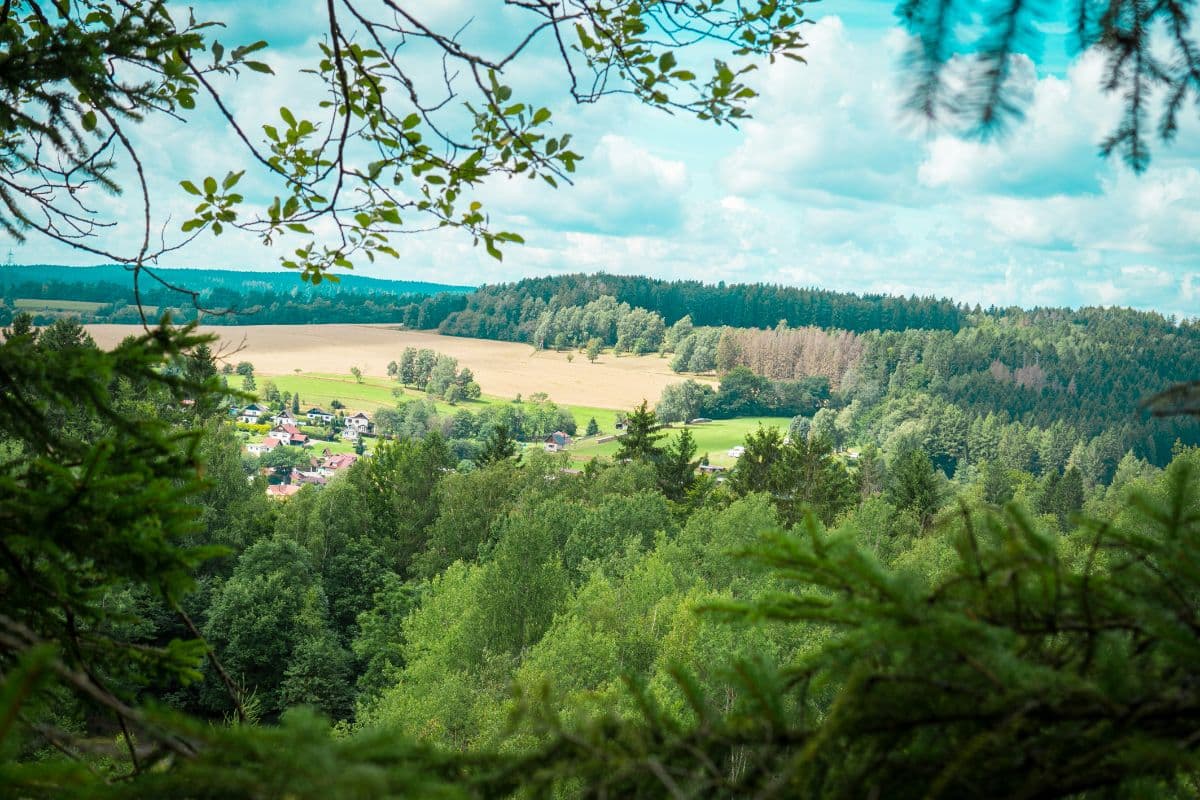 Thüringer Wald · Germany
Rennsteig
Seven days on the ridge of the Thuringian Forest: 169 km of white-R waymarks, 800 border stones and the oldest long-distance trail of Germany.