
Three days on the ridge to the Externsteine
Hermannsweg: Bielefeld to Horn-Bad Meinberg
 Teutoburger Wald, North Rhine-Westphalia · Germany

About Hermannsweg: Bielefeld to Horn-Bad Meinberg
The Hermannsweg runs 163 km from Rheine to Horn-Bad Meinberg along the Teutoburger Wald and is one of Germany's certified long-distance trails. This trip covers its eastern third, from Bielefeld to the Externsteine, which is the part that carries both of the route's monuments.
The first day leaves the Sparrenburg in Bielefeld and climbs into the forest above the city, past the Eiserner Anton and the marker of the 52nd parallel, before dropping to Oerlinghausen. The second stays on the ridge to the Hermannsdenkmal and then descends into Detmold, the old Residenz town of Lippe. The third is the longest: north out of Detmold, over the highest ground of the section at 434 m, past the Externsteine and down into Horn-Bad Meinberg.
Practical. 52 km over three days, 1,689 m of ascent in total, rated moderate. The surface is forest track throughout, with no scrambling and no exposure. Regional trains connect Bielefeld, Detmold and Horn-Bad Meinberg, and Oerlinghausen has its own service, so every stage ends at a station. Guest houses and hotels are plentiful in Detmold and Bielefeld; Oerlinghausen has a handful, so book that night first. The Hermannsdenkmal and the Externsteine both charge a small admission for the climb and the grounds.
Stages Hermannsweg: Bielefeld to Horn-Bad Meinberg
The Hermannsweg: Bielefeld to Horn-Bad Meinberg is split here into 3 stages of 15 to 22 km, 52 km in total, from Bielefeld to Horn-Bad Meinberg. The stages below are a sample itinerary: in the planner you put together your own days and choose where you sleep.
Bielefeld - Oerlinghausen
The day starts at the Sparrenburg, the castle on its rock above Bielefeld, and immediately leaves the city behind in the beech woods of the ridge. The path passes the Eiserner Anton, a monument of iron set among the trees, and the stone that marks the 52nd parallel, before the forest opens over the plain and drops gently to Oerlinghausen, where the day ends at a little over 230 m.
Oerlinghausen - Hiddesen
This is the shortest day and the one with the monument. From Oerlinghausen the route stays high, running through forestry and open heath on the crest until the Hermannsdenkmal appears on its hill, the copper figure of Arminius with its sword raised against the sky. The path passes directly beneath it and drops a short way into the woods above Hiddesen, where it ends beside the Donoperteich, a dark pond in a nature reserve, with the monument still standing over the trees behind you.
Hiddesen - Detmold - Horn-Bad Meinberg
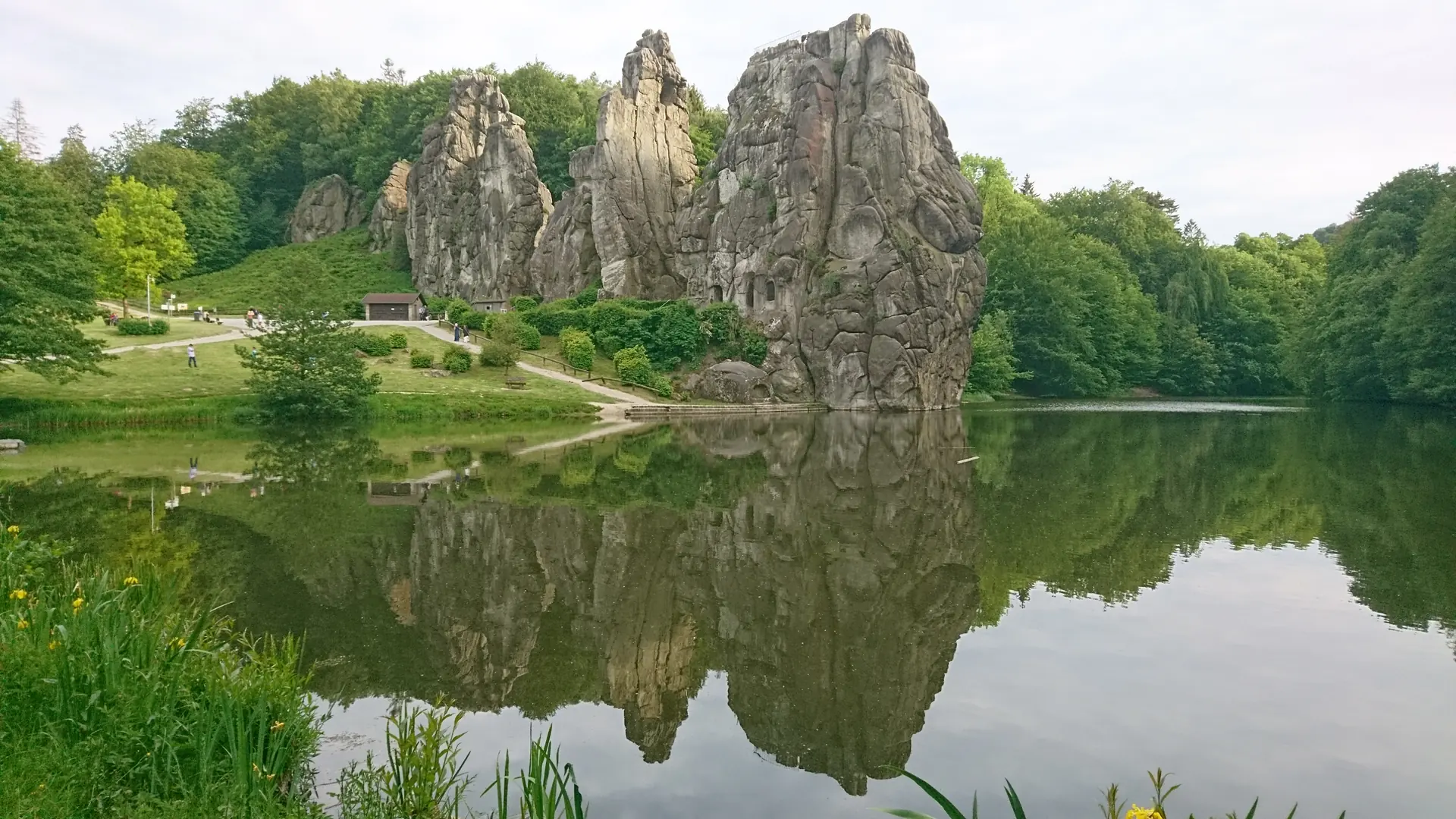
The longest day begins in the woods above Hiddesen and comes down into Detmold itself, past the palace and the half-timbered streets of the old town, before turning north again. Then it takes the high ground, climbing to 434 m, the highest point of this section, where the ridge is at its narrowest and the forest stands on both sides of the path. The Externsteine come without warning: five sandstone pillars rising out of the trees beside a small lake, carved and worn and visited for a thousand years. From there the route descends through Horn to the station at Horn-Bad Meinberg, where the walk ends.
FAQ
Below you'll find answers to some frequently asked questions.
How hard is this section of the Hermannsweg, and how many days does it take?
How hard is this section of the Hermannsweg, and how many days does it take?
Three days of fourteen to twenty-two kilometres, with 385 to 867 metres of climbing a day and a high point of 434 m, so moderate. The ground is forest track the whole way, there is nothing to scramble and nowhere the path runs along a drop. The difficulty comes from the length of the last day rather than from the terrain.
When is the best time of year to walk it?
When is the best time of year to walk it?
From April to October, with May and September the best of them, when the beeches are in leaf and the path is dry. High summer is pleasant on the ridge because the canopy shades it, but the Externsteine and the Hermannsdenkmal draw crowds at weekends, and the woods hold the heat on still August afternoons.
How do I get to Bielefeld, and how do I get home from Horn-Bad Meinberg?
How do I get to Bielefeld, and how do I get home from Horn-Bad Meinberg?
Regional trains run between Bielefeld, Detmold and Horn-Bad Meinberg, so the start, the middle and the finish all sit on one line, and Oerlinghausen has its own service. That means you can leave a car in Bielefeld, or base yourself in Detmold and ride to each stage, and Hiddesen is a short bus ride from Detmold if you would rather sleep in town. No day needs a taxi transfer.
Does the route actually pass the Hermannsdenkmal?
Does the route actually pass the Hermannsdenkmal?
It does, and closer than most people expect: the path runs about 45 m from the statue, so there is no detour and no decision to make. The climb up the monument itself is charged separately, and the view from the top takes in the whole ridge and, on a clear day, a great deal of Westphalia.
How much time should I leave for the Externsteine?
How much time should I leave for the Externsteine?
An hour is enough for the pillars and the lake, two if you want the paths through the rocks and the small exhibition. They sit about 60 m off the route, which means you can drop your pack at the entrance, and the last day still ends at a station with time to spare for the train.
Where should I sleep, and do I need to book?
Where should I sleep, and do I need to book?
Detmold and Bielefeld have plenty of hotels, Oerlinghausen has only a few guest houses, so book that night first and the rest can follow. Outside the summer holidays a week's notice is usually enough, while in July and August, and around the weekends when the Denkmal draws visitors, a month is safer.
Can I walk it with a day pack?
Can I walk it with a day pack?
Yes, and it suits the route: with a base in Detmold or Bielefeld, the train carries you to the start of each stage in under half an hour. If you would rather move from town to town, a taxi firm in Detmold will run a bag ahead for a fixed fee, which is worth arranging the evening before.
More trips nearby
 Saxon Switzerland · Germany
Malerweg
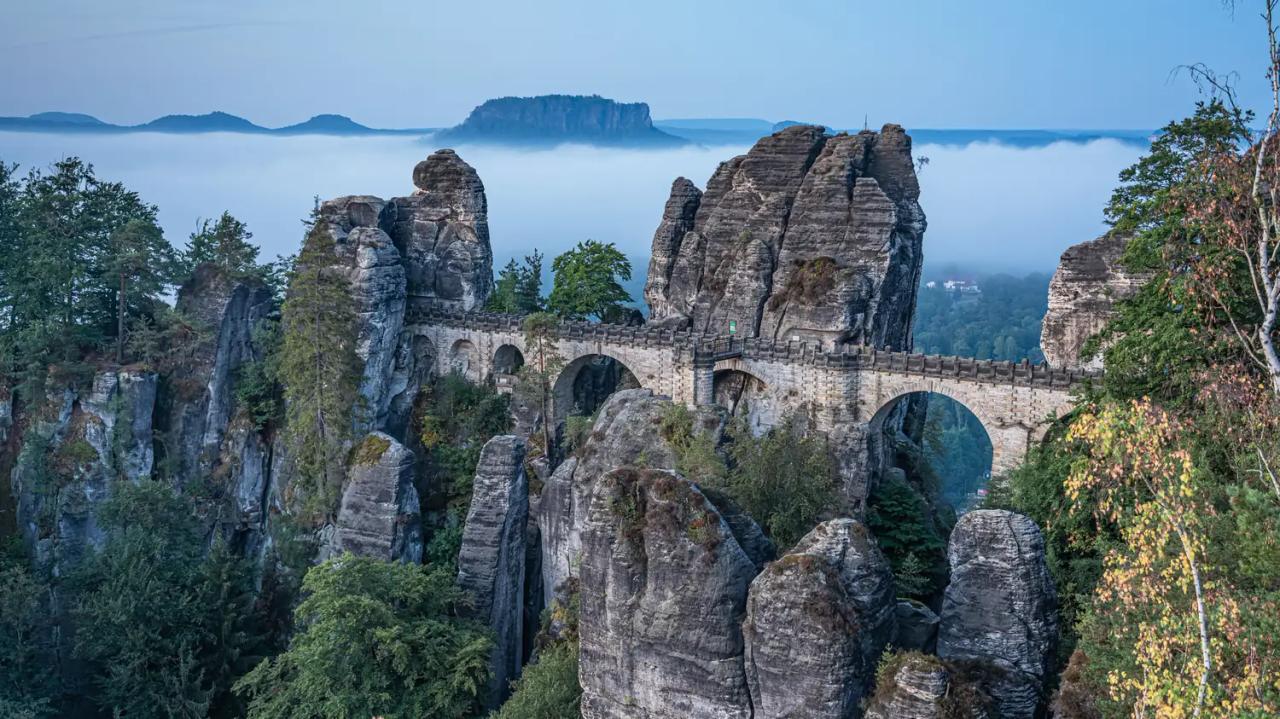
Eight stages on the painters' route through Saxon Switzerland: a figure of eight around the Elbe, over sandstone towers, dizzying ridge paths and stone steps, from Liebethal to Pirna.
 National Park Eifel · Germany
Wildnis Trail Eifel
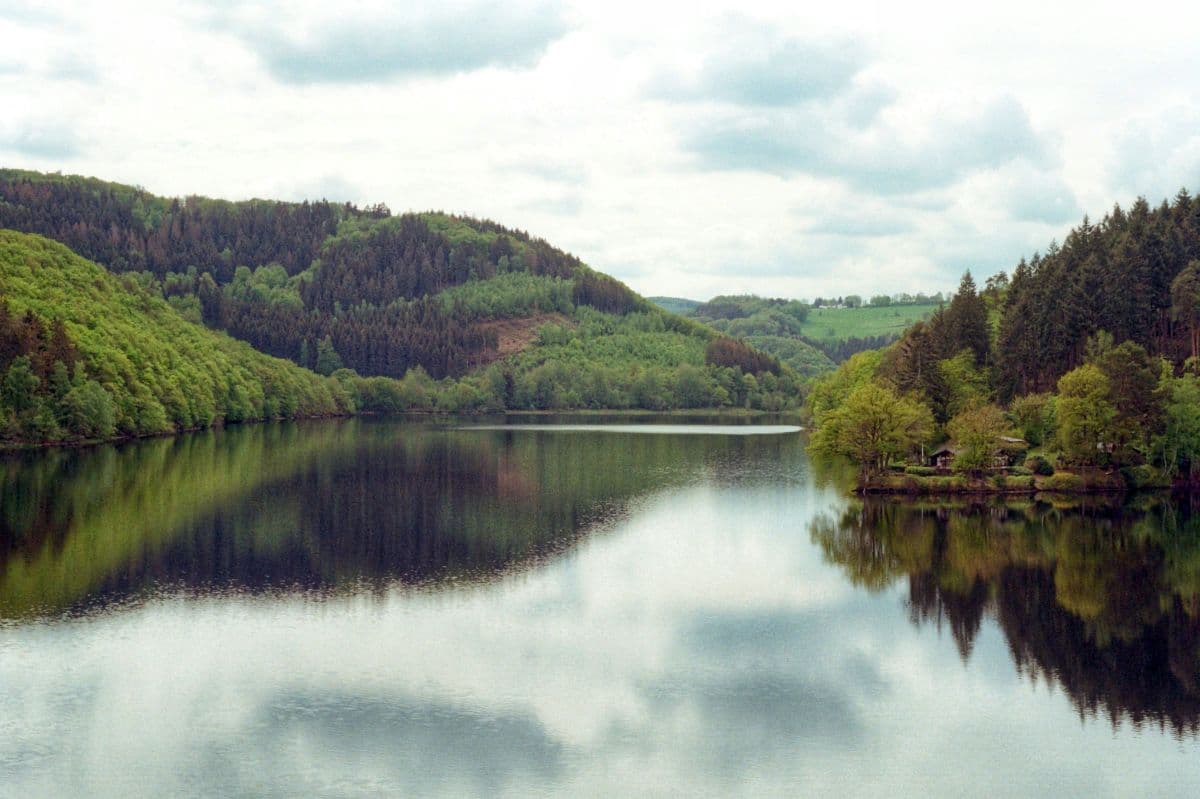
Four days through the Eifel National Park: beech forests, open high plains and the lakes along the Rur, with the deserted village of Wollseifen.
 Wetterstein, Bavaria · Austria, Germany
Zugspitze Tour
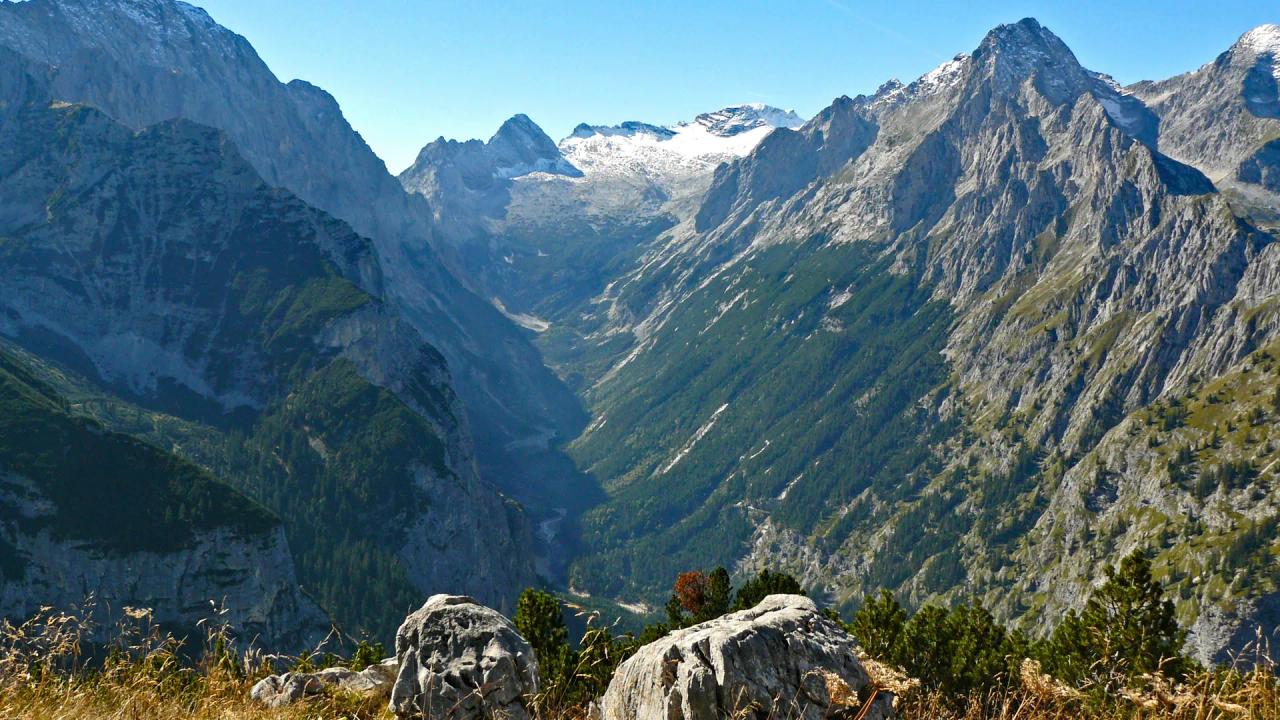
Three days from Garmisch-Partenkirchen through the Reintal to the Zugspitze, then down into Tyrol: the long, quiet way up Germany's highest mountain.